
From the very beginning, I’ve struggled with the concept of authenticity. The word holds a strange kind of power. Something either is or isn’t authentic. Real or fake. Tradition or imposter. It can make people feel proud, but it can also make people feel small.
I think that feeling is universal. Most people, at some point, have felt not good enough. Not productive enough. Not successful enough. Not enough for the room they’re standing in.
When Vit Beo first opened, I wasn’t prepared for how emotionally complicated that word would become for me. Authenticity feels especially rigid in the world of ethnic food. People are often far more comfortable deciding what is or isn’t authentic when it comes to someone else’s culture.
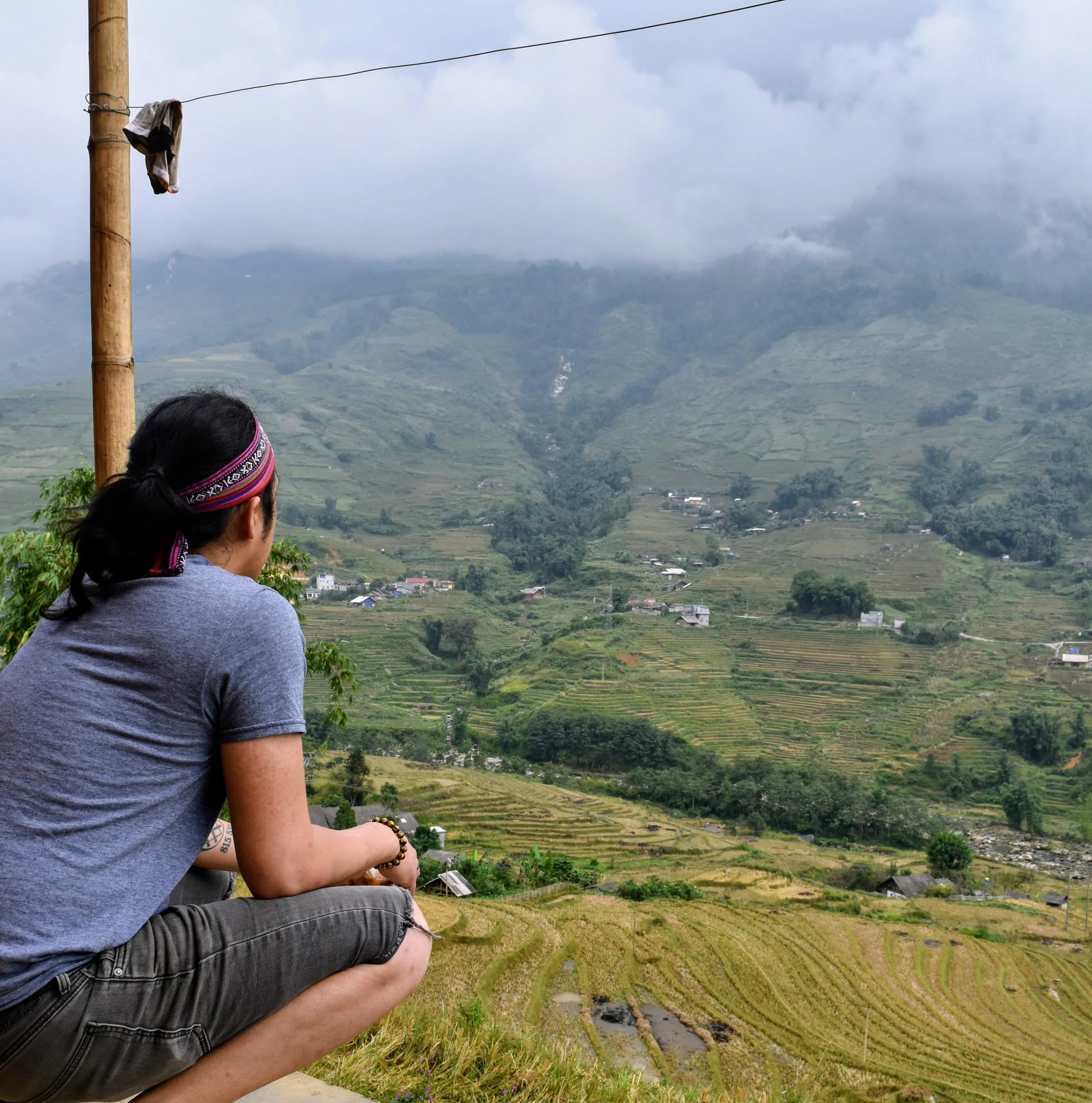
I knew early on that I didn’t want to do exactly what everyone else was doing. I wanted Vit Beo to feel personal. But it took a long trip to Vietnam for me to understand why.
I’m different.
I’m not a local. I’m not a refugee. I’m not even fully ethnically Vietnamese. I’m Viet Kieu — foreign Vietnamese. Somewhere between places. And the more I reflected on that, the more I realized that pretending otherwise would feel far more inauthentic to me.
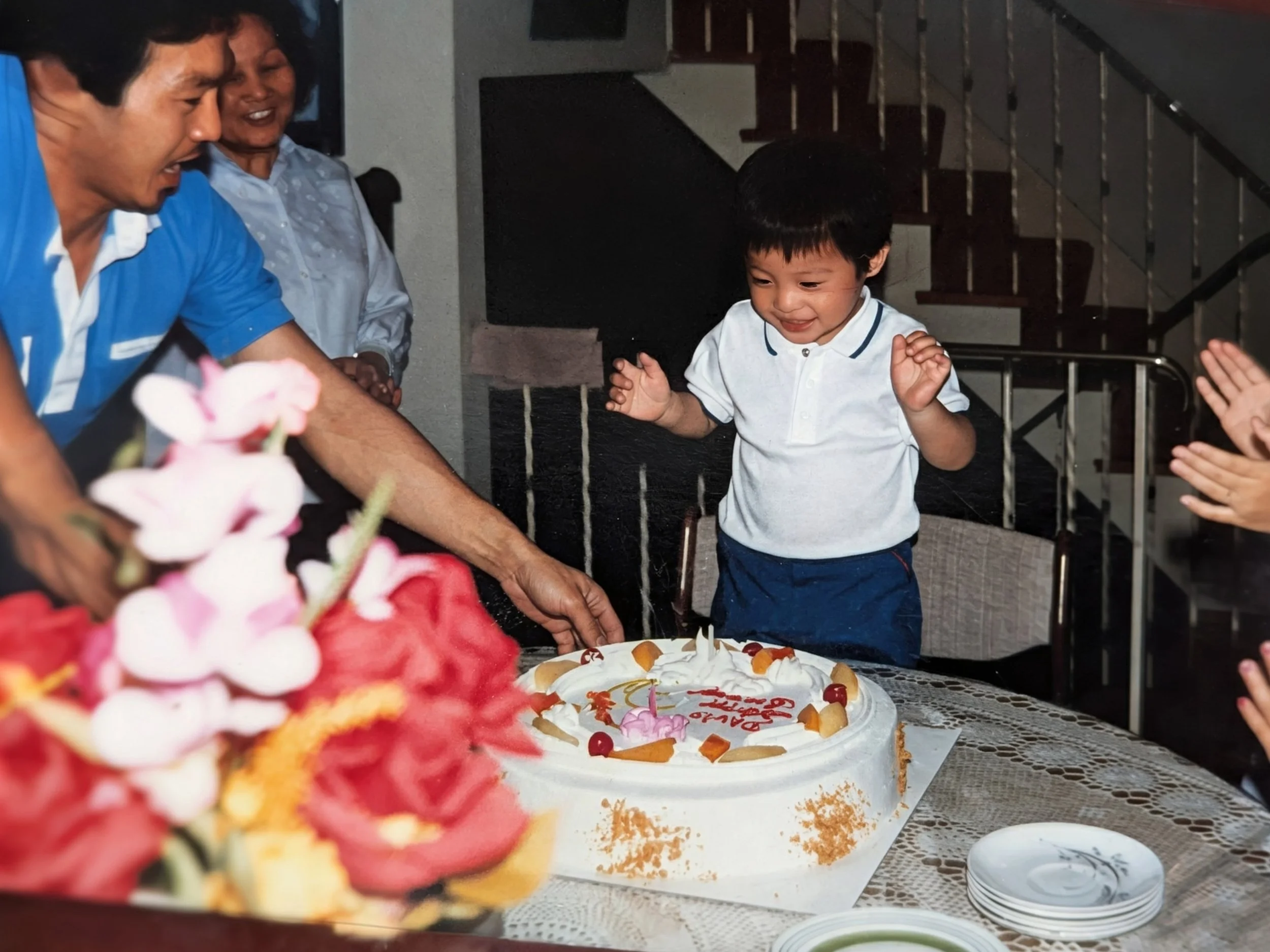
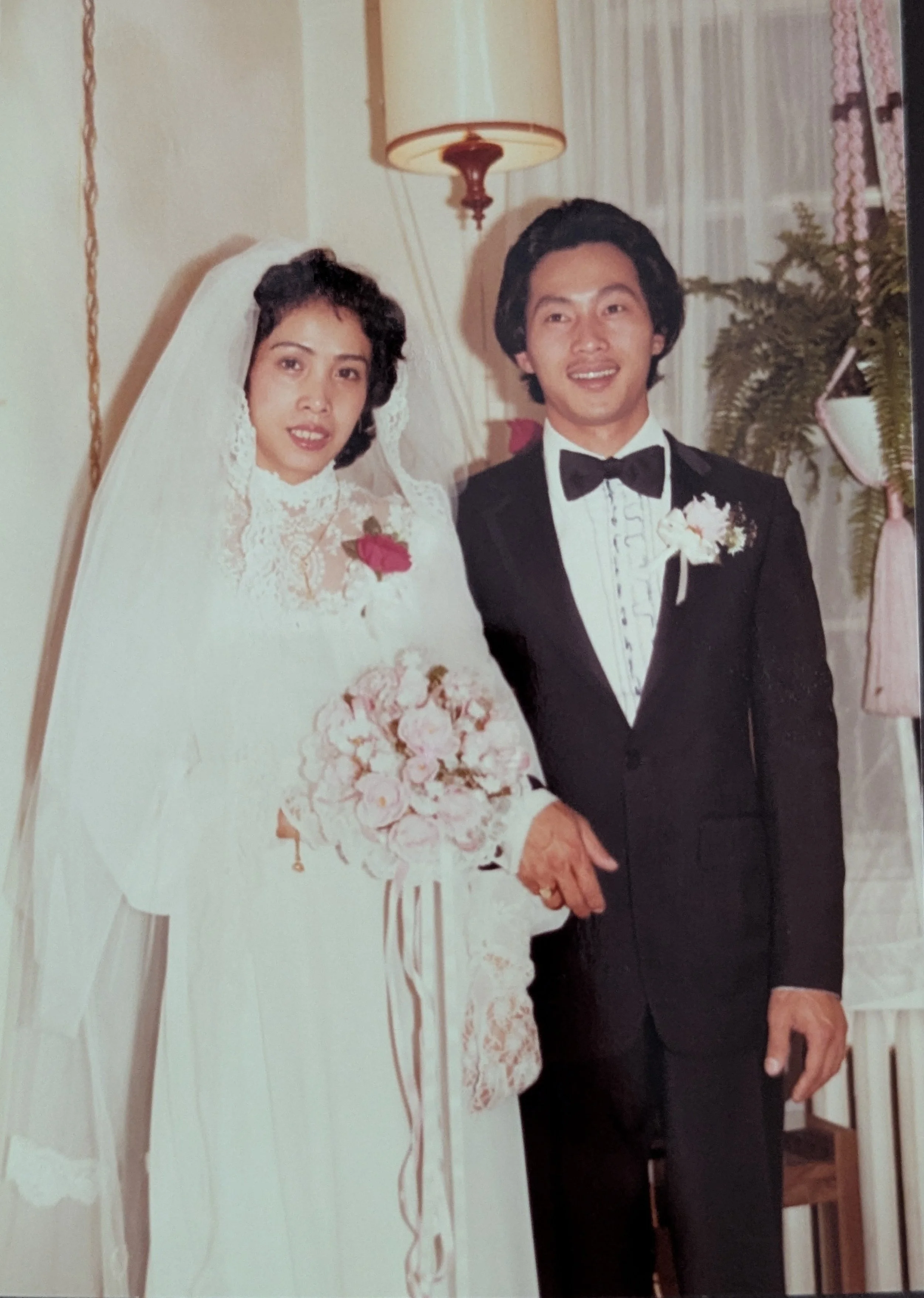
What I learned on that trip is that I don’t need to have lived every hardship to understand its weight. I don’t know what it’s like to flee from home. I don’t know what it’s like to survive war or occupation. But I was raised close enough to feel the gravity of those experiences in the way my family cooked, worried, sacrificed, adapted, and cared for each other.
That understanding changed the way I think about Vietnamese culture and, in turn, Vietnamese food.
Vietnamese history is filled with adaptation. Influence. Survival. Reinvention. The food itself reflects that reality. It has always evolved through movement, trade, colonization, migration, scarcity, resilience, and joy. Change was never separate from the story.
In Vietnamese culture, we don’t always say “I love you” directly. We say things like:
“Have you eaten yet?”
“Message me when you get home.”
“Be careful on the road.”
Love often shows up as care, labour, worry, feeding people, and quietly carrying burdens for one another.
I think about that a lot when I think about hospitality.
Vit Beo was never meant to preserve Vietnamese culture in amber. It was meant to honestly reflect my relationship to it — shaped by family, memory, Toronto, contradiction, and adaptation.
Maybe authenticity was never about staying unchanged.
Maybe it’s about being honest about where you stand in the story.
What does it mean to you?
By David Huynh
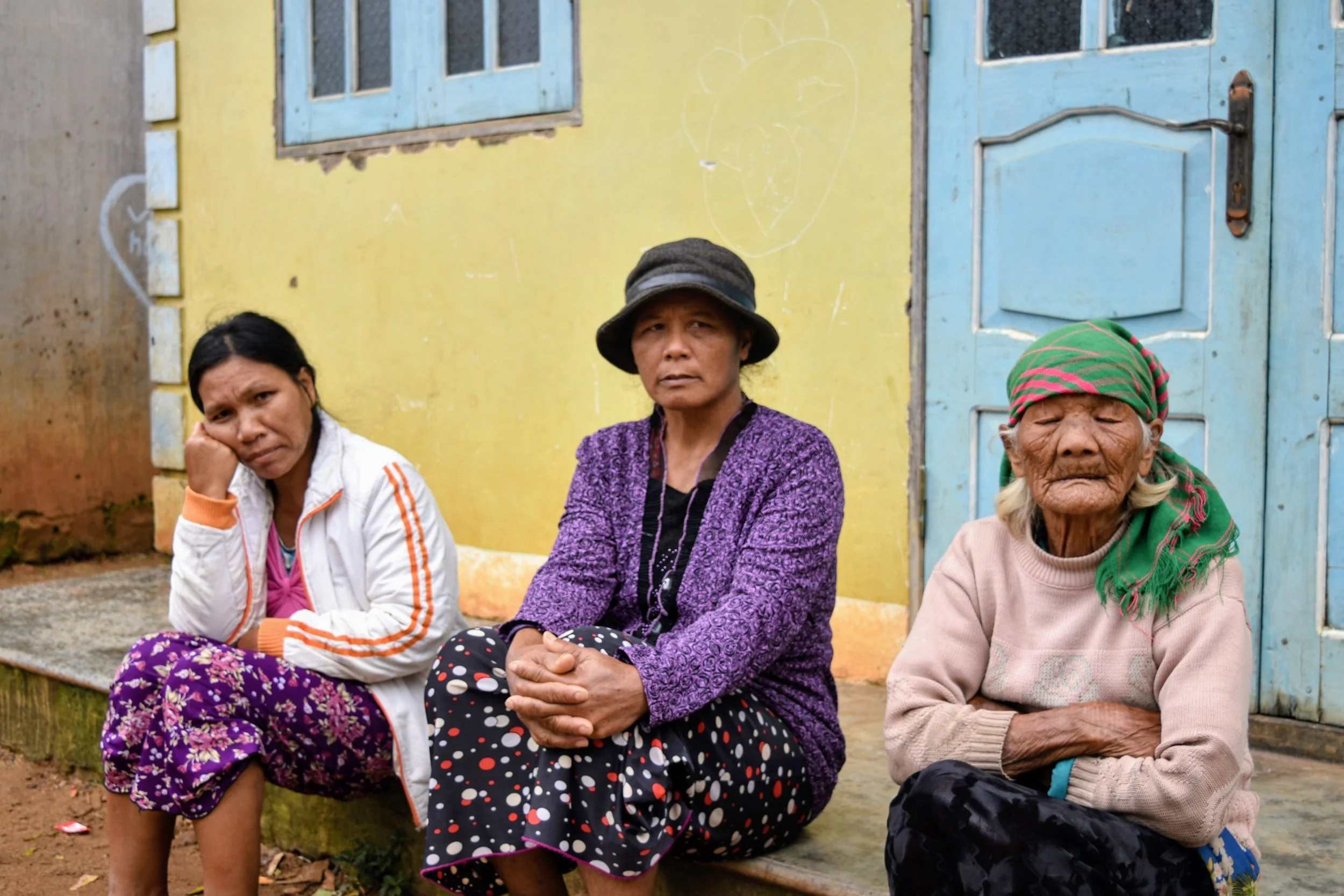
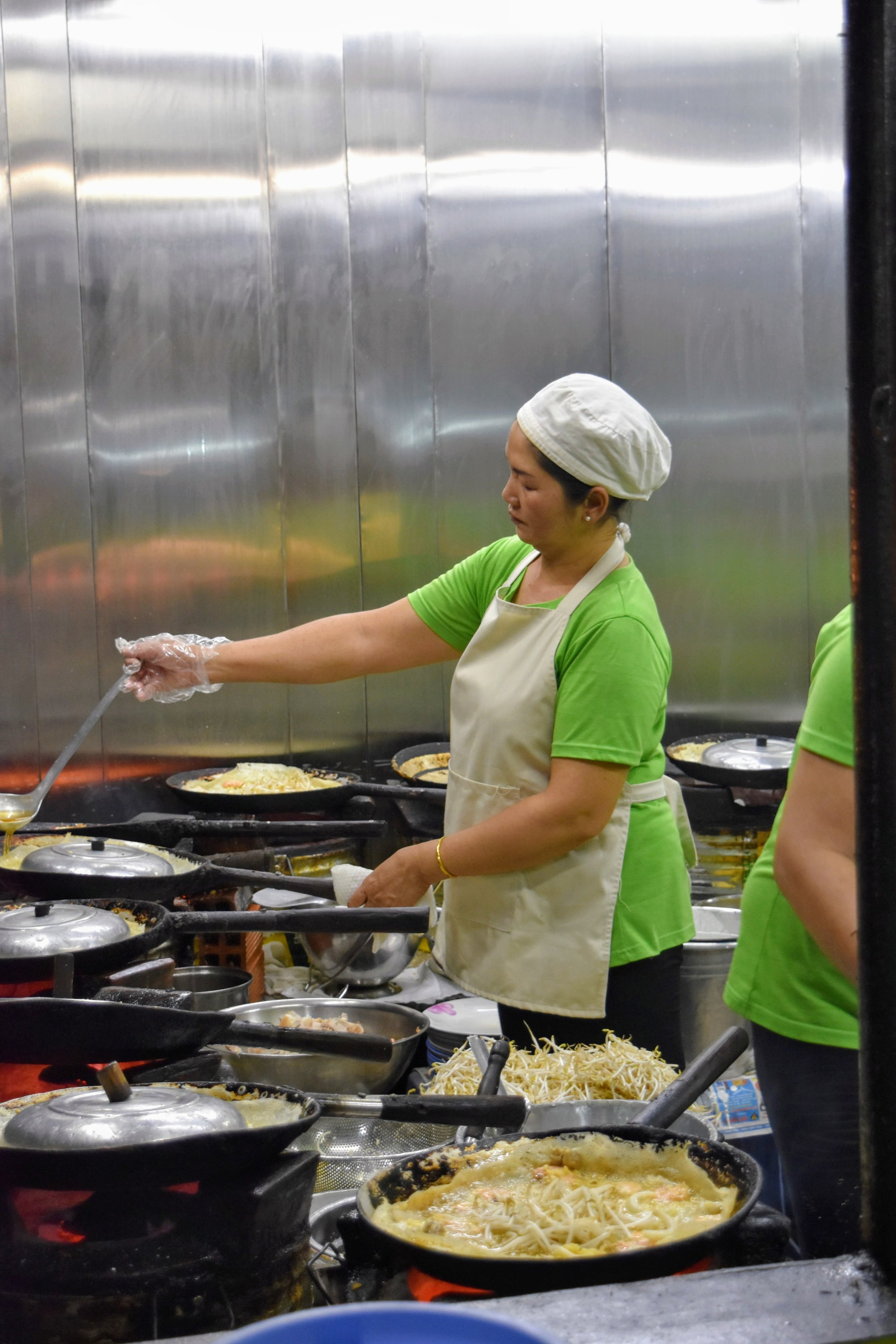
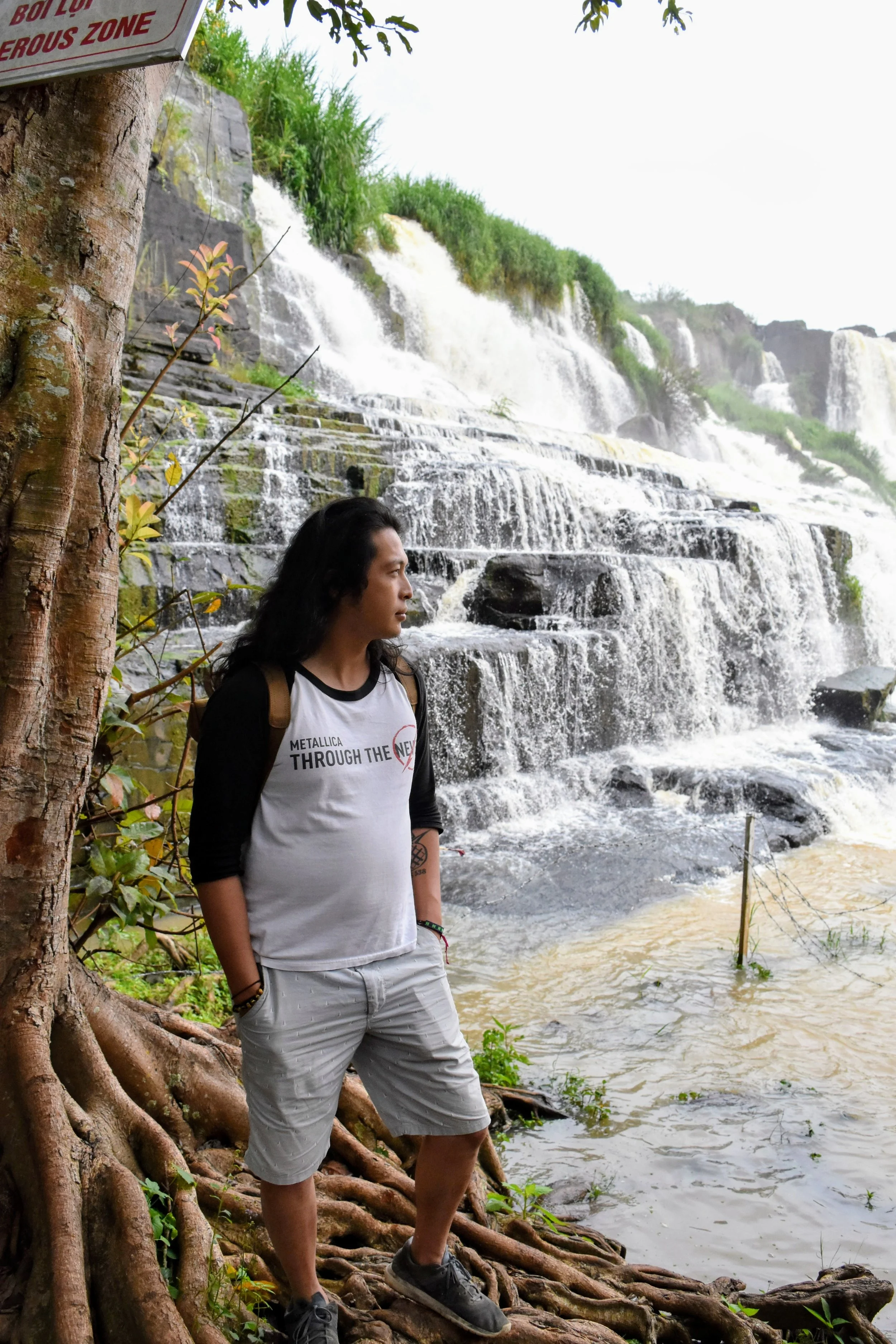
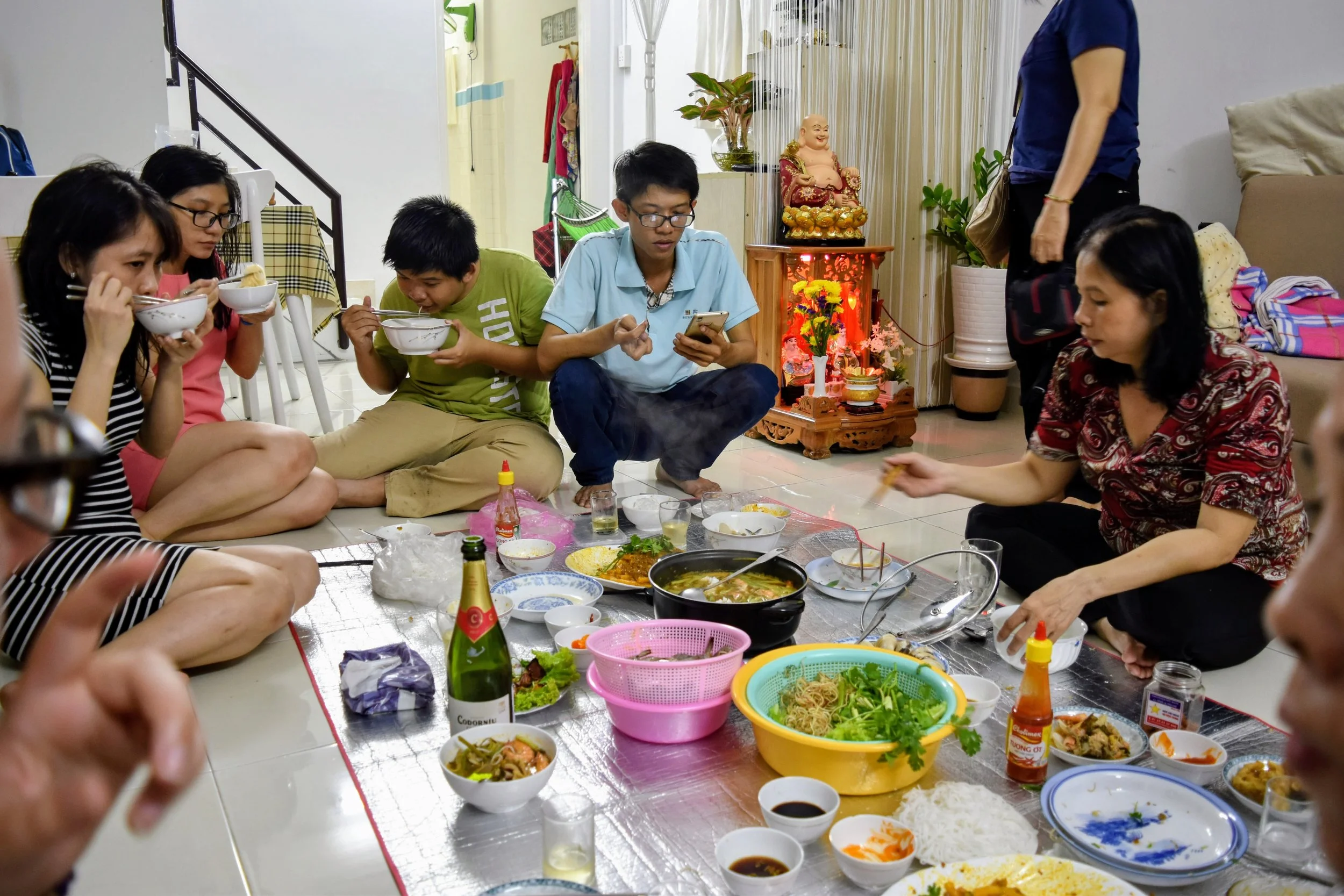
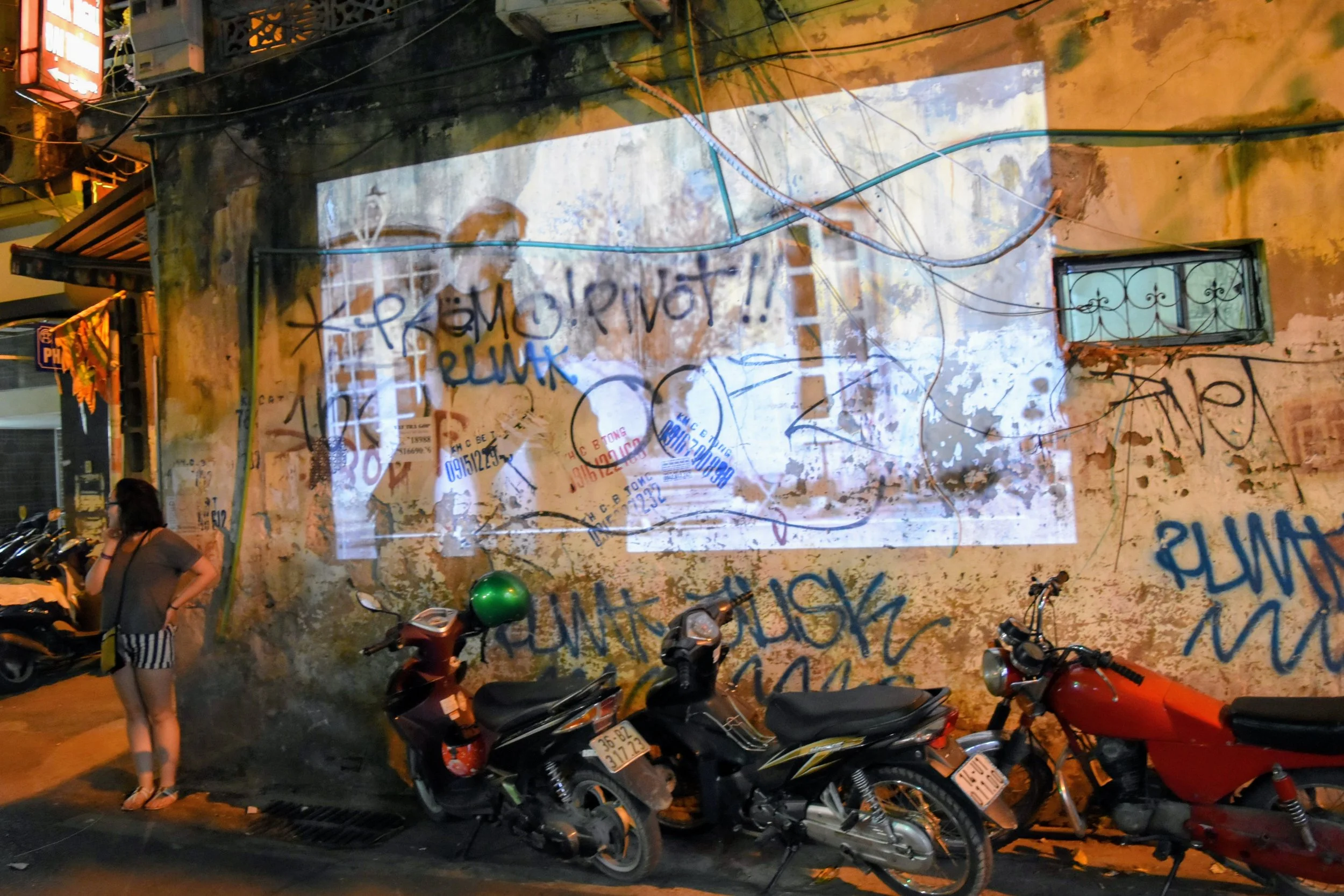
Hanoi Old Quarter Movie
I took this photo because it’s emblematic of history and life happening. The layers of paint, graffiti and never-ending electrical wires suggest an unending accumulation of generations and stories. The most compelling realization is that Vit Beo is the movie projection. It doesn’t cover the wall; it doesn’t change anything about the wall. It borrows the wall to tell a different story, and the wall and all of its details become a part of it.