
If you’re Vietnamese, there’s something unmistakable about the metallic snap of a tin of fish opening.
Then comes the smell: acidic tomato sauce, the rich oily fish, that sharp savouriness that can fill an entire kitchen in seconds. It's like pulling the pin on an umami grenade.
For some Việt Kiều (Global Vietnamese diaspora), it might evoke embarrassing memories of school lunches — the kind of meal whose aroma announced itself before the lid was fully peeled back.
For others, it recalls Saturday mornings and the kind of breakfast that appeared not because it was planned, but because it was there.
For many in Vietnam, it means something else entirely: a quick stop at a bánh mì cart for cá mòi sốt cà, warm stewed sardines tucked into a crackling baguette and eaten curbside before work.
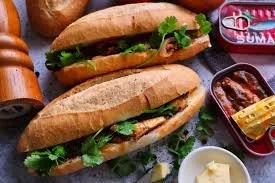
It is humble food. Working food.
The kind of food that rarely gets its shine, but quietly sustains people.
Vietnam has always known how to preserve fish.
Drying, salting, and fermenting — these are foundational technologies of Vietnamese cooking. Fish sauce is perhaps the clearest example: preservation transformed into identity.
Tinned fish, by comparison, is relatively new.
The canning process was developed in early 19th-century France as a solution for military food preservation. Through colonial occupation and global trade, canned goods eventually arrived in Vietnam as part of a foreign system of supply and convenience.
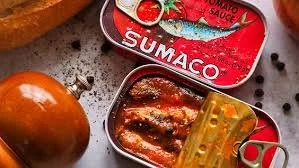
But like so many imported things — coffee, baguettes, pâté — they did not remain foreign for long. Vietnamese cooks adapted.
Fish simmered with tomato, black pepper, onion, chillies and aromatics.
What arrived as convenience became comfort — and, in time, unmistakably Vietnamese.
Our cuisine has always been shaped by adaptation — by making abundance from modest ingredients, by responding to circumstance with ingenuity, by turning necessity into pleasure.
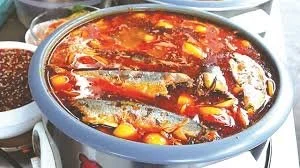
Bánh mì cá mòi is one of the quietest proofs of that.
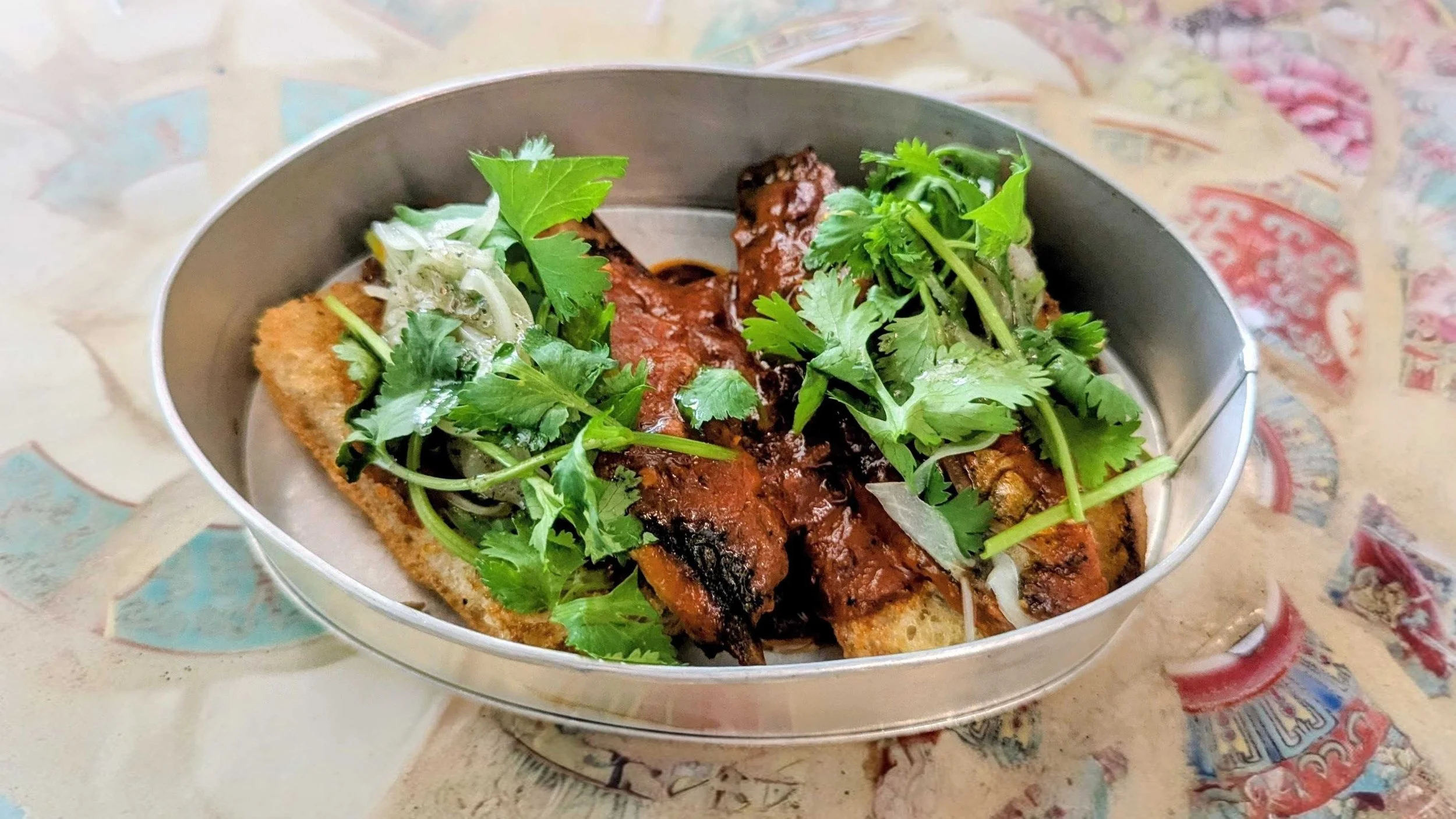
Our Mackerel and Tomato on Toast begins there.
We trade the sardines for mackerel, lightly cured instead of stewed.
Tomato reduced with fish stock.
Baguette, toasted with butter.
Brightness from pickled onion and cilantro.
Preserved fish transformed through care, memory, and reinterpretation.
Vietnamese food has never been static. It has always evolved through contact, constraint, migration, and imagination.
What arrived as preservation became comfort.
What began as necessity became memory.
What was once imported became unmistakably ours.
By David Huynh